

- University
- Academic
- Schools/Vocational Schools
- Vocational School of Justice
- Vocational School
- Vocational School
- Department of Banking and Insurance (Turkish)
- Department of Computer Programming (Turkish)
- Department of Foreign Trade (Turkish)
- Department of Graphic Design (Turkish)
- Department of Interior Design (Turkish)
- Department of Construction Technology (Turkish)
- Department of Occupational Health and Safety (Turkish)
- Department of Media and Communication (Turkish)
- Department of Architectural Restoration (Turkish)
- Department of Radio and Tv Programming (Turkish)
- Department of Civil Aviation Cabin Services (Turkish)
- Department of Civil Aviation Transportation Management (Turkish)
- Department of Tourism and Hotel Management (Turkish)
- Department of Applied English Translation
- Vocational School Of Health Services
- Vocational School Of Health Services
- Department of Child Development (Turkish)
- Department of Physiotherapy (Turkish)
- Department of Paramedic (Turkish)
- Department of Opticianry (Turkish)
- Department of Medical Documentation and Secreteriat (Turkish)
- Department of Medical Imaging Techniques (Turkish)
- Department of Medical Laboratory Techniques (Turkish)
- Department of Elderly Care (Turkish)
- School of Applied Management Sciences
- School of Foreign Languages
- Faculties
- Faculty of Arts and Sciences
- Faculty of Fine Arts and Design
- Faculty of Law
- Faculty of Communication
- Faculty of Business
- Faculty of Engineering
- Faculty of Engineering
- Department of Computer Engineering
- Department of Biomedical Engineering
- Department of Electrical and Electronics Engineering
- Department of Industrial Engineering
- Department of Food Engineering
- Department of Genetics and Bioengineering
- Department of Aerospace Engineering
- Department of Civil Engineering
- Department of Mechanical Engineering
- Department of Mechatronics Engineering
- Department of Software Engineering
- Faculty of Health Sciences
- Medicine
- Graduate School
- Common Courses
- Schools/Vocational Schools
- Research
- Research Centers
- Library
- Smart Campus
- Technology Transfer Office
- İzmir Sciencepark
- Continuous Education Center (EKOSEM)
- Children's University
- Ethics Committee
- Teaching and Learning Center (EKOEĞİTİM)
- Psychology Application and Research Center
- Researcher Training Coordinatorship
- Research Collaborations And Innovation Coordinatorship
- Campus
- INTERNATIONAL
- Contact
- 25TH YEAR
MATH 535 | Course Introduction and Application Information
| Course Name |
Wavelet Based Methods for Ordinary Differential Equations With MATLAB
|
|
Code
|
Semester
|
Theory
(hour/week) |
Application/Lab
(hour/week) |
Local Credits
|
ECTS
|
|
MATH 535
|
Fall/Spring
|
3
|
0
|
3
|
7.5
|
| Prerequisites |
None
|
|||||
| Course Language |
English
|
|||||
| Course Type |
Elective
|
|||||
| Course Level |
Second Cycle
|
|||||
| Mode of Delivery | - | |||||
| Teaching Methods and Techniques of the Course | Problem SolvingLecture / Presentation | |||||
| National Occupation Classification | - | |||||
| Course Coordinator | ||||||
| Course Lecturer(s) | ||||||
| Assistant(s) | ||||||
| Course Objectives | This course aims to provide a solid understanding of orthogonal polynomials and wavelet-based numerical methods for solving ordinary differential equations. It covers the use of these numerical techniques for a wide variety of problems in science, engineering, and other fields, and emphasizes the evaluation of their accuracy and convergence. |
| Learning Outcomes |
The students who succeeded in this course;
|
| Course Description | This course focuses on the theory and applications of orthogonal polynomials and wavelet-based numerical methods for solving ordinary differential equations. The course covers the use of orthogonal polynomials and wavelet-based approximation techniques in solving ordinary differential equations and error and convergence analysis. |
| Related Sustainable Development Goals |
|
|
|
Core Courses | |
| Major Area Courses | ||
| Supportive Courses | ||
| Media and Management Skills Courses | ||
| Transferable Skill Courses |
WEEKLY SUBJECTS AND RELATED PREPARATION STUDIES
| Week | Subjects | Related Preparation |
| 1 | Introduction to Orthogonal Polynomials and Their Computational Applications | Arfken, G. B. and Weber H.J. (2013). Mathematical Methods for Physicists. 7th ed. Amsterdam: Elsevier. (Chapter 10) |
| 2 | Taylor Polynomials, Their Properties and Numerical Approximation; MATLAB-based Computation of Taylor Expansions and Error Analysis | Keskin, A. Ü. (2019). Ordinary differential equations for engineers: Problems with MATLAB solutions. Springer. https://doi.org/10.1007/978-3-319-95243-7 (Chapter 4) |
| 3 | Legendre Differential Equations and Legendre Polynomials; Generation and Visualization of Legendre Polynomials via MATLAB | Arfken, G. B. and Weber H.J. (2013). Mathematical Methods for Physicists. 7th ed. Amsterdam: Elsevier. (Chapter 12) |
| 4 | Associated Legendre Polynomials; Numerical Evaluation of Associated Legendre Functions Using MATLAB | Arfken, G. B. and Weber H.J. (2013). Mathematical Methods for Physicists. 7th ed. Amsterdam: Elsevier. (Chapter 12) |
| 5 | Chebyshev Polynomials; Numerical generation of Chebyshev Nodes Using MATLAB | Keskin, A. Ü. (2019). Ordinary differential equations for engineers: Problems with MATLAB solutions. Springer. https://doi.org/10.1007/978-3-319-95243-7 (Chapter 5) |
| 6 | Laguerre and Hermite Polynomials; Computational Experiments With Laguerre and Hermite polynomials | Arfken, G. B. and Weber H.J. (2013). Mathematical Methods for Physicists. 7th ed. Amsterdam: Elsevier. (Chapter 13) |
| 7 | Gram–Schmidt Orthogonalization and Weighted Inner Products; Numerical Orthogonalization procedures in MATLAB | Arfken, G. B. and Weber H.J. (2013). Mathematical Methods for Physicists. 7th ed. Amsterdam: Elsevier. (Chapter 10) |
| 8 | Collocation Methods for Solving Ordinary Differential Equations; Implementation of Collocation Schemes in MATLAB | Frazier, M. W. (1999). An Introduction to Wavelets Through Linear Algebra. Springer-Verlag. (Chapter 5) |
| 9 | Collocation Methods for Solving Ordinary Differential Equations; Implementation of Collocation Schemes in MATLAB | Frazier, M. W. (1999). An Introduction to Wavelets Through Linear Algebra. Springer-Verlag. (Chapter 5) |
| 10 | Error and Convergence Analysis; Numerical Error Norms and Convergence Rates | Keskin, A. Ü. (2019). Ordinary differential equations for engineers: Problems with MATLAB solutions. Springer. https://doi.org/10.1007/978-3-319-95243-7 (Chapter 8) |
| 11 | Introduction to Wavelets, Legendre Wavelets and Operational Matrices With Their MATLAB-based Representations | Frazier, M. W. (1999). An Introduction to Wavelets Through Linear Algebra. Springer-Verlag. (Chapter 5) |
| 12 | Chebyshev Wavelets and Operational Matrices with Their MATLAB-based Representations | Frazier, M. W. (1999). An Introduction to Wavelets Through Linear Algebra. Springer-Verlag. (Chapter 5) |
| 13 | Laguerre Wavelets and Operational Matrices with Their MATLAB-based Representations | Mason, J. C. and Handscomb, D. C. (2002). Chebyshev Polynomials 1st ed. Chapman & Hall/CRC. (Chapter 10) |
| 14 | Solving Ordinary Differential Equations with Wavelet-Based Numerical Methods; MATLAB Implementations and Numerical Experiments | Mason, J. C. and Handscomb, D. C. (2002). Chebyshev Polynomials 1st ed. Chapman & Hall/CRC. (Chapter 10) |
| 15 | Semester Review | |
| 16 | Final Exam |
| Course Notes/Textbooks | Arfken, G. B. and Weber H.J. (2013). Mathematical Methods for Physicists. 7th ed. Amsterdam: Elsevier. ISBN-13: 978-0-12-384654-9
Keskin, A. Ü. (2019). Ordinary differential equations for engineers: Problems with MATLAB solutions. Springer. ISBN: 978-3-319-95242-0. https://doi.org/10.1007/978-3-319-95243-7
Frazier, M. W. (1999). An Introduction to Wavelets Through Linear Algebra. Springer-Verlag. ISBN-13: 978-0-387-98639-5.
Mason, J. C. and Handscomb, D. C. (2002). Chebyshev Polynomials 1st ed. Chapman & Hall/CRC. ISBN 978-0-420-03611-4. |
| Suggested Readings/Materials | Burden, R. L. and Faires, J. D. (2010). Numerical Analysis, 9th ed. Brooks & Cole, Cengage Learning. ISBN-13: 978-0-538-73351-9.
Timothy S. (2012). Numerical Analysis, 2nd ed., Pearson. ISBN-13: 978-0-321-78367-7
Kreyszig, E. O. (2007). Introductory Functional Analysis with Applications. Wiley India. ISBN 978-8126511914.
Ahmadi, M. R. and Adibi, H. (2007). The Chebyshev Tau Technique for the Solution of Laplace's Equation. Applied Mathematics and Computation, 184(2), 895–900.
Ibraheem, G. H. and Al-Jawary, M. A. (2020). The operational matrix of Legendre polynomials for solving thin film flow problems. Alexandria Engineering Journal, 59(5), 4027–4033.
Baishya, C. and Veeresha, P. (2021). Laguerre polynomial-based operational matrix of integration for solving fractional differential equations with non-singular kernel. Proceedings of the Royal Society A: Mathematical, Physical and Engineering Sciences, 477(2254), 20210438. https://doi.org/10.1098/rspa.2021.0438
Gupta, A. K., Saha Ray, S. S. (2014). Wavelet methods for solving fractional order differential equations. Mathematical Problems in Engineering, 2014, Article ID 140453. https://doi.org/10.1155/2014/140453 |
EVALUATION SYSTEM
| Semester Activities | Number | Weigthing |
| Participation | ||
| Laboratory / Application | ||
| Field Work | ||
| Quizzes / Studio Critiques | ||
| Portfolio | ||
| Homework / Assignments |
1
|
10
|
| Presentation / Jury |
1
|
20
|
| Project |
1
|
20
|
| Seminar / Workshop | ||
| Oral Exams | ||
| Midterm | ||
| Final Exam |
1
|
50
|
| Total |
| Weighting of Semester Activities on the Final Grade |
3
|
50
|
| Weighting of End-of-Semester Activities on the Final Grade |
1
|
50
|
| Total |
ECTS / WORKLOAD TABLE
| Semester Activities | Number | Duration (Hours) | Workload |
|---|---|---|---|
| Theoretical Course Hours (Including exam week: 16 x total hours) |
16
|
3
|
48
|
| Laboratory / Application Hours |
16
|
0
|
|
| Study Hours Out of Class |
14
|
5
|
70
|
| Field Work |
0
|
||
| Quizzes / Studio Critiques |
0
|
||
| Portfolio |
0
|
||
| Homework / Assignments |
1
|
10
|
10
|
| Presentation / Jury |
1
|
20
|
20
|
| Project |
1
|
33
|
33
|
| Seminar / Workshop |
0
|
||
| Oral Exam |
0
|
||
| Midterms |
0
|
||
| Final Exam |
1
|
44
|
44
|
| Total |
225
|
COURSE LEARNING OUTCOMES AND PROGRAM QUALIFICATIONS RELATIONSHIP
|
#
|
Program Competencies/Outcomes |
* Contribution Level
|
|||||||
|
1
|
2
|
3
|
4
|
5
|
|||||
| 1 |
|
-
|
-
|
-
|
X
|
-
|
|||
| 2 |
|
-
|
-
|
-
|
-
|
-
|
|||
| 3 |
|
-
|
-
|
-
|
-
|
X
|
|||
| 4 |
|
-
|
-
|
-
|
X
|
-
|
|||
| 5 |
|
-
|
-
|
-
|
-
|
-
|
|||
| 6 |
|
-
|
-
|
-
|
X
|
-
|
|||
| 7 |
|
-
|
-
|
-
|
-
|
-
|
|||
| 8 |
|
-
|
-
|
-
|
-
|
-
|
|||
| 9 |
|
-
|
-
|
-
|
-
|
-
|
|||
| 10 |
|
-
|
-
|
-
|
-
|
-
|
|||
| 11 |
|
-
|
-
|
-
|
-
|
-
|
|||
*1 Lowest, 2 Low, 3 Average, 4 High, 5 Highest
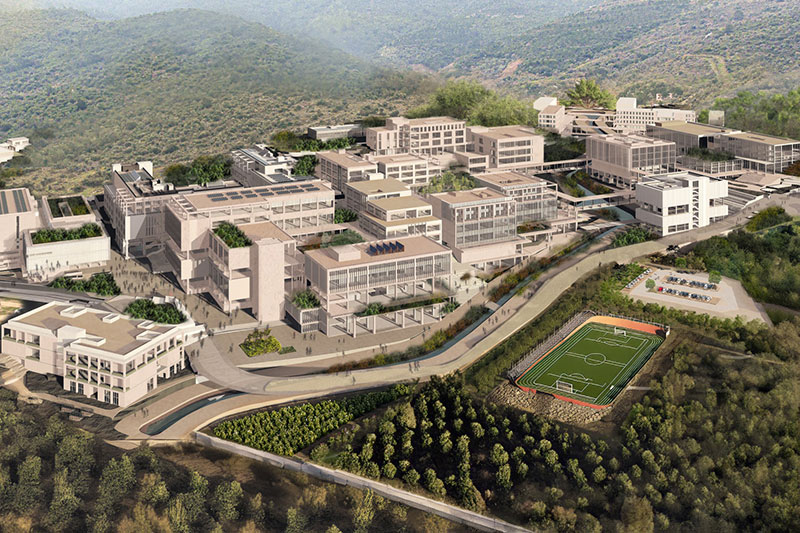
IZMIR UNIVERSITY OF ECONOMICS GÜZELBAHÇE CAMPUS
DetailsGLOBAL CAREER
As Izmir University of Economics transforms into a world-class university, it also raises successful young people with global competence.
More..CONTRIBUTION TO SCIENCE
Izmir University of Economics produces qualified knowledge and competent technologies.
More..VALUING PEOPLE
Izmir University of Economics sees producing social benefit as its reason for existence.
More..