


- University
- Academic
- Schools/Vocational Schools
- Vocational School of Justice
- Vocational School
- Vocational School
- Department of Banking and Insurance (Turkish)
- Department of Computer Programming (Turkish)
- Department of Foreign Trade (Turkish)
- Department of Graphic Design (Turkish)
- Department of Interior Design (Turkish)
- Department of Construction Technology (Turkish)
- Department of Occupational Health and Safety (Turkish)
- Department of Media and Communication (Turkish)
- Department of Architectural Restoration (Turkish)
- Department of Radio and Tv Programming (Turkish)
- Department of Civil Aviation Cabin Services (Turkish)
- Department of Civil Aviation Transportation Management (Turkish)
- Department of Tourism and Hotel Management (Turkish)
- Department of Applied English Translation
- Vocational School Of Health Services
- Vocational School Of Health Services
- Department of Child Development (Turkish)
- Department of Physiotherapy (Turkish)
- Department of Paramedic (Turkish)
- Department of Opticianry (Turkish)
- Department of Medical Documentation and Secreteriat (Turkish)
- Department of Medical Imaging Techniques (Turkish)
- Department of Medical Laboratory Techniques (Turkish)
- Department of Elderly Care (Turkish)
- School of Applied Management Sciences
- School of Foreign Languages
- Faculties
- Faculty of Arts and Sciences
- Faculty of Fine Arts and Design
- Faculty of Law
- Faculty of Communication
- Faculty of Business
- Faculty of Engineering
- Faculty of Engineering
- Department of Computer Engineering
- Department of Biomedical Engineering
- Department of Electrical and Electronics Engineering
- Department of Industrial Engineering
- Department of Food Engineering
- Department of Genetics and Bioengineering
- Department of Aerospace Engineering
- Department of Civil Engineering
- Department of Mechanical Engineering
- Department of Mechatronics Engineering
- Department of Software Engineering
- Faculty of Health Sciences
- Medicine
- Graduate School
- Common Courses
- Schools/Vocational Schools
- Research
- Research Centers
- Library
- Smart Campus
- Technology Transfer Office
- İzmir Sciencepark
- Continuous Education Center (EKOSEM)
- Children's University
- Ethics Committee
- Teaching and Learning Center (EKOEĞİTİM)
- Psychology Application and Research Center
- Researcher Training Coordinatorship
- Research Collaborations And Innovation Coordinatorship
- Campus
- INTERNATIONAL
- Contact
- 25TH YEAR
MATH 537 | Course Introduction and Application Information
| Course Name |
Mathematics and Artifical Intelligence
|
|
Code
|
Semester
|
Theory
(hour/week) |
Application/Lab
(hour/week) |
Local Credits
|
ECTS
|
|
MATH 537
|
Fall/Spring
|
3
|
0
|
3
|
7.5
|
| Prerequisites |
None
|
|||||
| Course Language |
English
|
|||||
| Course Type |
Elective
|
|||||
| Course Level |
Second Cycle
|
|||||
| Mode of Delivery | - | |||||
| Teaching Methods and Techniques of the Course | Problem SolvingLecture / Presentation | |||||
| National Occupation Classification | - | |||||
| Course Coordinator | ||||||
| Course Lecturer(s) | ||||||
| Assistant(s) | ||||||
| Course Objectives | This course aims to teach the mathematical foundations of artificial intelligence and machine learning, and to enable students to understand and apply modern AI models by implementing these foundations in the Python environment. |
| Learning Outcomes |
The students who succeeded in this course;
|
| Course Description | This course provides a detailed and applied introduction to the mathematical foundations of artificial intelligence. Students learn the mathematical structure of linear algebra, probability and statistics, optimization, machine learning, and basic deep learning, and they implement these concepts using Python. |
| Related Sustainable Development Goals |
|
|
|
Core Courses | |
| Major Area Courses | ||
| Supportive Courses | ||
| Media and Management Skills Courses | ||
| Transferable Skill Courses |
WEEKLY SUBJECTS AND RELATED PREPARATION STUDIES
| Week | Subjects | Related Preparation |
| 1 | Introduction to AI; the role of mathematical foundations; data types; the machine learning workflow. | Stuart Russell & Peter Norvig – Artificial Intelligence: A Modern Approach, Ch.1–2 Bishop – Pattern Recognition and Machine Learning, Introduction Python: McKinney – Python for Data Analysis, Ch.1 |
| 2 | Linear Algebra I: vectors, matrix operations, norms, inner product spaces. | Gilbert Strang – Linear Algebra and Its Applications, Ch.1–2 Goodfellow et al. – Deep Learning, Linear Algebra Appendix NumPy: array operations |
| 3 | Linear Algebra II: eigenvalues/eigenvectors, SVD, mathematical foundations of PCA. | Strang – Introduction to Linear Algebra, Ch.6–7 Shlens – A Tutorial on PCA* sklearn PCA |
| 4 | Probability: basic concepts, distributions, conditional probability, Bayes’ Rule. | Blitzstein & Hwang – Introduction to Probability, Ch.1–4 Murphy – Machine Learning: A Probabilistic Perspective, Ch.2 |
| 5 | Statistical learning: estimation, bias–variance trade-off, confidence intervals. | James et al. – An Introduction to Statistical Learning, Ch.2–3 Hastie et al. – The Elements of Statistical Learning, Ch.2 |
| 6 | Optimization I: convexity, derivation of gradient descent. | Boyd & Vandenberghe –Convex Optimization, Ch.1–2 Ruder – An overview of gradient descent optimization algorithms |
| 7 | Optimization II: learning rate, momentum, regularization. | Goodfellow – Deep Learning, Ch.7 Bishop – Pattern Recognition and ML, Regularization Section |
| 8 | Mathematics of linear regression and logistic regression. | ISLR – Ch.3–4 Murphy – MLPP, Regression Chapters |
| 9 | Classification: SVM optimization problem, margin analysis. | Hastie et al. – The Elements of Statistical Learning, SVM Chapter Vapnik – Statistical Learning Theory |
| 10 | Clustering and dimensionality reduction: K-means, t-SNE, UMAP. | ISLR – Unsupervised Learning Ch. 12 van der Maaten & Hinton – Visualizing Data using t-SNE |
| 11 | Introduction to neural networks: perceptron mathematics, MLP architecture. | Goodfellow – Deep Learning, Ch.6 Nielsen – Neural Networks and Deep Learning, Ch.1–2 |
| 12 | Backpropagation: chain rule and derivative computations. | Goodfellow – Ch.6.5 Nielsen – Backpropagation Chapter |
| 13 | Mathematics of NLP: word embeddings, cosine similarity, attention mechanism. | Vaswani et al. – Attention is All You Need Jurafsky & Martin – Speech and Language Processing, Embeddings Chapter |
| 14 | Ethics, safety, adversarial examples, and model bias. | Goodfellow – Explaining and Harnessing Adversarial Examples O'Neil – Weapons of Math Destruction Introduction |
| 15 | Semester Review | |
| 16 | Final Exam |
| Course Notes/Textbooks | Russell, S. J., & Norvig, P. (2021). Artificial intelligence: A modern approach (4th ed.). Pearson. ISBN: 978-0134610993 Bishop, C. M. (2006). Pattern recognition and machine learning. Springer. ISBN: 978-0387310732 Blitzstein, J. K., & Hwang, J. (2019). Introduction to probability (2nd ed.). CRC Press. ISBN: 978-1138369917 Boyd, S., & Vandenberghe, L. (2004). Convex optimization. Cambridge University Press. ISBN: 978-0521833783 Goodfellow, I., Bengio, Y., & Courville, A. (2016). Deep learning. MIT Press. ISBN: 978-0262035613 Hastie, T., Tibshirani, R., & Friedman, J. (2009). The elements of statistical learning: Data mining, inference, and prediction (2nd ed.). Springer. ISBN: 978-0387848570 James, G., Witten, D., Hastie, T., & Tibshirani, R. (2013). An introduction to statistical learning: With applications in R. Springer. ISBN: 978-1461471370 Jurafsky, D., & Martin, J. H. (2009). Speech and language processing: An introduction to natural language processing, computational linguistics, and speech recognition (2nd ed.). Prentice Hall. ISBN: 978-0131873216 Strang, G. (2006). Linear algebra and its applications (4th ed.). Brooks/Cole. ISBN: 978-0030105678 Ruder, S. (2016). An overview of gradient descent optimization algorithms. arXiv. https://arxiv.org/abs/1609.04747 Murphy, K. P. (2012). Machine learning: A probabilistic perspective. MIT Press. ISBN: 978-0262018029 Vapnik, V. N. (1998). The nature of statistical learning theory (2nd ed.). Springer. ISBN: 978-0387987804 van der Maaten, L., & Hinton, G. (2008). Visualizing data using t-SNE. Journal of Machine Learning Research, 9, 2579–2605 Nielsen, M. (2015). Neural networks and deep learning. Online book. http://neuralnetworksanddeeplearning.com Vaswani, A., Shazeer, N., Parmar, N., Uszkoreit, J., Jones, L., Gomez, A. N., Kaiser, L., & Polosukhin, I. (2017). Attention is all you need. arXiv. https://arxiv.org/abs/1706.03762 O’Neil, C. (2016). Weapons of math destruction: How big data increases inequality and threatens democracy. Crown. ISBN: 978-0553418811 McKinney, W. (2022). Python for data analysis: Data wrangling with pandas, NumPy, and Jupyter (3rd ed.). O’Reilly Media. ISBN: 978-1098104030 |
| Suggested Readings/Materials |
EVALUATION SYSTEM
| Semester Activities | Number | Weigthing |
| Participation | ||
| Laboratory / Application | ||
| Field Work | ||
| Quizzes / Studio Critiques | ||
| Portfolio | ||
| Homework / Assignments |
1
|
40
|
| Presentation / Jury |
1
|
10
|
| Project |
1
|
20
|
| Seminar / Workshop | ||
| Oral Exams | ||
| Midterm | ||
| Final Exam |
1
|
30
|
| Total |
| Weighting of Semester Activities on the Final Grade |
3
|
70
|
| Weighting of End-of-Semester Activities on the Final Grade |
1
|
30
|
| Total |
ECTS / WORKLOAD TABLE
| Semester Activities | Number | Duration (Hours) | Workload |
|---|---|---|---|
| Theoretical Course Hours (Including exam week: 16 x total hours) |
16
|
3
|
48
|
| Laboratory / Application Hours |
16
|
0
|
|
| Study Hours Out of Class |
14
|
5
|
70
|
| Field Work |
0
|
||
| Quizzes / Studio Critiques |
0
|
||
| Portfolio |
0
|
||
| Homework / Assignments |
1
|
10
|
10
|
| Presentation / Jury |
1
|
10
|
10
|
| Project |
1
|
33
|
33
|
| Seminar / Workshop |
0
|
||
| Oral Exam |
0
|
||
| Midterms |
0
|
||
| Final Exam |
1
|
54
|
54
|
| Total |
225
|
COURSE LEARNING OUTCOMES AND PROGRAM QUALIFICATIONS RELATIONSHIP
|
#
|
Program Competencies/Outcomes |
* Contribution Level
|
|||||||
|
1
|
2
|
3
|
4
|
5
|
|||||
| 1 |
|
-
|
-
|
-
|
X
|
-
|
|||
| 2 |
|
-
|
-
|
-
|
-
|
-
|
|||
| 3 |
|
-
|
-
|
-
|
-
|
-
|
|||
| 4 |
|
-
|
-
|
-
|
X
|
-
|
|||
| 5 |
|
-
|
-
|
-
|
-
|
-
|
|||
| 6 |
|
-
|
-
|
-
|
X
|
-
|
|||
| 7 |
|
-
|
-
|
X
|
-
|
-
|
|||
| 8 |
|
-
|
-
|
-
|
-
|
-
|
|||
| 9 |
|
-
|
-
|
-
|
-
|
-
|
|||
| 10 |
|
-
|
-
|
-
|
-
|
-
|
|||
| 11 |
|
-
|
-
|
-
|
X
|
-
|
|||
*1 Lowest, 2 Low, 3 Average, 4 High, 5 Highest
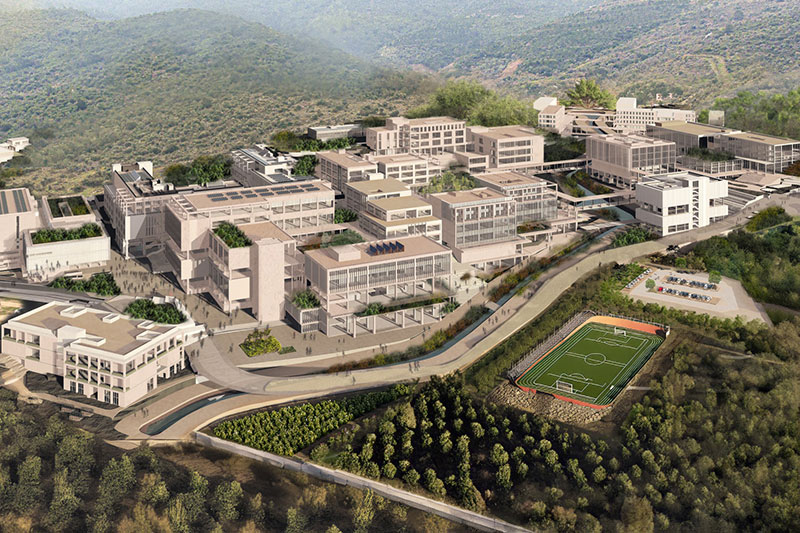
IZMIR UNIVERSITY OF ECONOMICS GÜZELBAHÇE CAMPUS
DetailsGLOBAL CAREER
As Izmir University of Economics transforms into a world-class university, it also raises successful young people with global competence.
More..CONTRIBUTION TO SCIENCE
Izmir University of Economics produces qualified knowledge and competent technologies.
More..VALUING PEOPLE
Izmir University of Economics sees producing social benefit as its reason for existence.
More..